
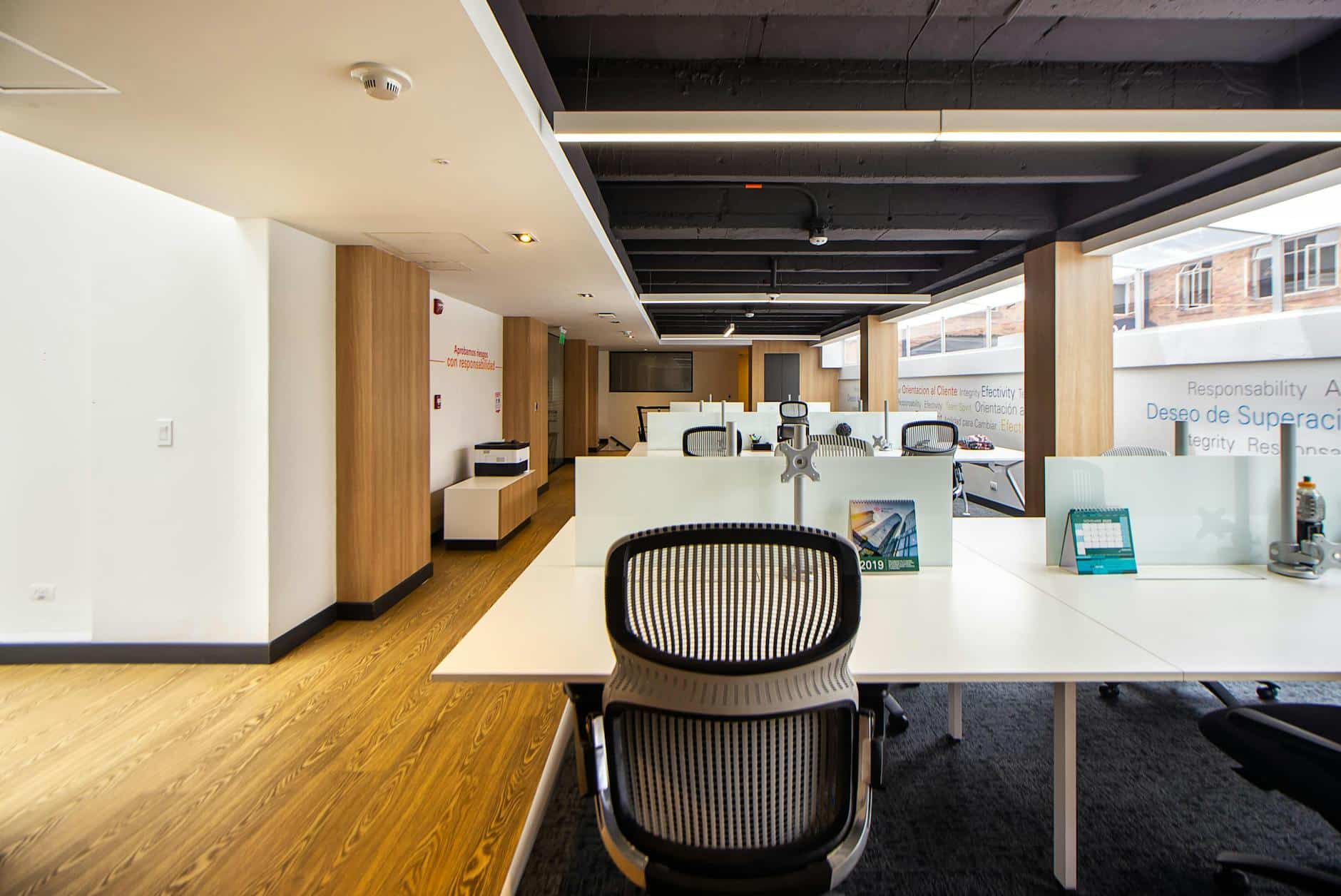
Your office isn’t just a backdrop. It’s a business decision you’re paying for every month. In Singapore, where commercial rent is a significant line item, how you design and fit out your workspace directly affects how well your people perform, how easily your teams collaborate, and how much friction builds up in daily operations. This guide walks through how to think about layout, budgeting and partner selection when planning your next office project.
Make the space actually work
A well-designed office does something specific: it shapes how people move, where they gather, and how quickly decisions get made. That’s why the best starting point for any fit-out isn’t picking finishes. It’s understanding how your team actually works.
Before you talk to anyone about flooring or partitions, map your work patterns. Where do people focus? Where do they get interrupted? Where do informal conversations happen, and where should they? A clear answer to those questions gives any design team something real to work with.
Plan for focus, flow and flexibility
Not everyone on your team needs the same kind of space at the same time. Some work requires deep concentration. Other moments call for a quick whiteboard session or a proper meeting room. A good office layout accounts for all of this without wasting space.
The best layouts aren’t necessarily the densest. They’re the ones that give your team the right setting for whatever they’re doing, without the noise bleed from a nearby call, the queue at the printer, or the conference room that sits empty 80% of the week. When design starts from real behaviour, you end up with space that people actually use the way it was intended.
Let your office reflect what you value
Where you put the pantry, the quiet booths, the touchdown areas: these decisions send a signal. They tell your staff whether the office is designed for them or just for headcount.
A thoughtful placement of shared amenities encourages the kind of informal interaction that builds culture, without pulling people away from focused work. Combine that with good acoustic treatment and natural light where it matters, and you create an environment that people want to come back to, which matters more than ever in a hybrid working world.
Budget for outcomes, not just line items
Cost comparisons are seductive. It’s easy to pull quotes apart and compare rates for demolition, partitions, loose furniture, and services. But that approach can miss what really matters: what will this office actually deliver once your team moves in?
When reviewing any fit-out quote, look beyond the numbers. Make sure the scope is clearly defined, covering what’s included, what’s assumed, and what’s excluded. A quote that seems lean might be hiding vague allowances or deferred decisions that surface as variations later. The best budgets are built around outcomes, not lowest line items.
Ask about programme too: how does the contractor handle landlord approvals, after-hours work, and commissioning? These aren’t footnotes. They affect both risk and cost.
Set clear rules before comparing bids
If you’re collecting multiple bids, give everyone the same brief. Same drawings, same performance standards, same handover requirements. Without that level-playing-field discipline, you’re not comparing bids. You’re comparing assumptions.
Tie your milestones to approvals, long-lead items and site readiness early on. Define decision gates so that changes don’t cascade into delays. A procurement process with clear rules protects your timeline and keeps stakeholder trust intact.
Choose a partner, not just a contractor
Once your brief and budget are in shape, vendor selection gets much clearer. You’re not just looking for someone to install finishes. You’re looking for a team that can coordinate design intent, compliance requirements, procurement and on-site execution without losing the thread between them.
The question to ask any shortlisted firm isn’t “can you do this?” It’s “who owns each stage, and how do you coordinate when things get complicated?” Fragmented responsibility is usually where projects slow down. A team with one accountable lead tends to move faster and protect the original brief all the way through to handover.
For Singapore workplaces that need a single point of accountability across strategy, design, authority submissions, fit-out coordination and handover, Ampersand Associates works directly with facilities, operations and HR teams to carry the project end to end.
Look at evidence, not just credentials
Before you shortlist anyone, ask for proof. References from completed projects. Safety records. How they handle defects and change requests. These aren’t box-ticking exercises. They tell you how a firm behaves when things don’t go to plan.
In one recent Singapore project, Ampersand Associates helped a regional client meaningfully improve how their space was used, not by spending more, but by rethinking how quiet rooms and meeting settings were distributed across the floor. Better planning, not bigger budgets.
Ask any potential partner how their past results translate into measurable outcomes relevant to your project. If they can answer that clearly, you’re in good hands.
Bringing it together
A successful office change happens when strategy, budget and delivery stay aligned from brief to handover. That means thinking about layout in terms of real work patterns, comparing quotes on a fair and consistent basis, and choosing a partner who can carry the whole process, not just their portion of it.
If you’re planning your next office project and want to approach it with that kind of clarity, get in touch with the team at Ampersand Associates to talk through what you need.